
Yes, depreciation recapture applies whenever you sell a rental property for more than its adjusted basis, and it usually costs more than owners expect. The IRS also requires you to reduce your basis by depreciation “allowed or allowable,” so skipping deductions on your tax return never lets you skip the bill later.
TL;DR:
- Claim depreciation consistently, as skipping it increases both your tax burden during ownership and your recapture liability upon sale.
- Accurately track all capital improvements and their depreciation to avoid overstating or understating your basis, which impacts your gain calculation.
- Understand that higher depreciation accelerations, like cost segregation, can raise your ordinary income recapture at sale, potentially offsetting initial tax savings.
- Prepare detailed records and seek an exit-tax estimate before listing to optimize sale negotiations and avoid surprises at closing.
- Strategies such as 1031 exchanges, holding until death, or careful sale timing can defer or reduce recapture, but never fully eliminate it.
Table of Contents
- What Depreciation Recapture on a Rental Property Actually Means
- How to Calculate Depreciation Recapture, Step by Step
- Section 1245 vs. Section 1250: Why the Tax Rate Depends on the Asset
- Reporting Recapture: Forms, Records, and Filing Steps
- Strategies to Defer or Reduce the Recapture Bill
- Cost Segregation: Model the Exit Before You Accelerate
- TrueMeasure’s Seller Checklist for Rental Property Owners
- How Improvements and Capital Expenditures Change the Recapture Math
- What Landlords Consistently Get Wrong About Recapture
- How TrueMeasure Helps You Plan the Exit, Not Just File the Return
- Sources
- FAQ
What Depreciation Recapture on a Rental Property Actually Means
Depreciation recapture is the IRS collecting back some of the tax benefit you got while you owned the property. Every year you hold a rental, you deduct depreciation against your rental income, and that deduction lowers your adjusted basis in the asset. Sell for a gain, and the portion of that gain tied to depreciation gets pulled back into taxable income at less favorable rates than long-term capital gains.
Here’s the mechanic most landlords miss: recapture isn’t a separate transaction. It’s a recharacterization. The IRS looks at your total gain on sale and asks how much of it exists only because you deducted depreciation instead of the property simply appreciating. That slice gets taxed differently than the rest.
IRS Publication 527 lays out the mechanics for residential rental property, including how MACRS straight-line depreciation works, when depreciation starts and stops, and how basis adjusts over the holding period. The publication also confirms a rule that surprises a lot of owners:
- Basis reduces by the greater of depreciation you actually claimed or depreciation you were entitled to claim, called “allowed or allowable.”
- If you never claimed depreciation on your return, the IRS still treats your basis as if you had.
- That means skipping depreciation doesn’t protect you from recapture. It just means you paid more tax during the holding period and still owe recapture at sale.
The IRS’s own FAQ on depreciation and recapture states this directly: the greater of allowed or allowable depreciation must be considered at the time of sale. This is one of the most consequential rules in rental real estate, and it’s exactly why we tell every property owner we work with: claim the depreciation. Refusing to take it on your return is one of the worst tax decisions a landlord can make, because it gives up a deduction today while the recapture liability accrues anyway.
How to Calculate Depreciation Recapture, Step by Step
Calculating depreciation recapture on rental property comes down to five moving pieces: your original basis, capital improvements, accumulated depreciation, your sale price, and how the IRS splits your gain between recapture and capital gain. Get these in order and the math is straightforward, even if the tax result stings.
- Start with your original cost basis. This is your purchase price plus qualifying acquisition costs (title, legal, transfer taxes), minus the value allocated to land, since land doesn’t depreciate.
- Add capital improvements. A new roof, an HVAC system replacement, a kitchen remodel. These increase your basis and get added to what you can eventually depreciate.
- Subtract accumulated depreciation. This is the total depreciation you’ve claimed (or should have claimed) since you placed the property in service, per IRS Publication 527.
- Calculate your adjusted basis. Original basis plus improvements minus accumulated depreciation equals adjusted basis.
- Determine your realized gain. Sale price minus selling costs minus adjusted basis equals total gain.
- Split the gain. The portion equal to accumulated depreciation is subject to recapture. Anything above that is taxed as regular long-term capital gain.
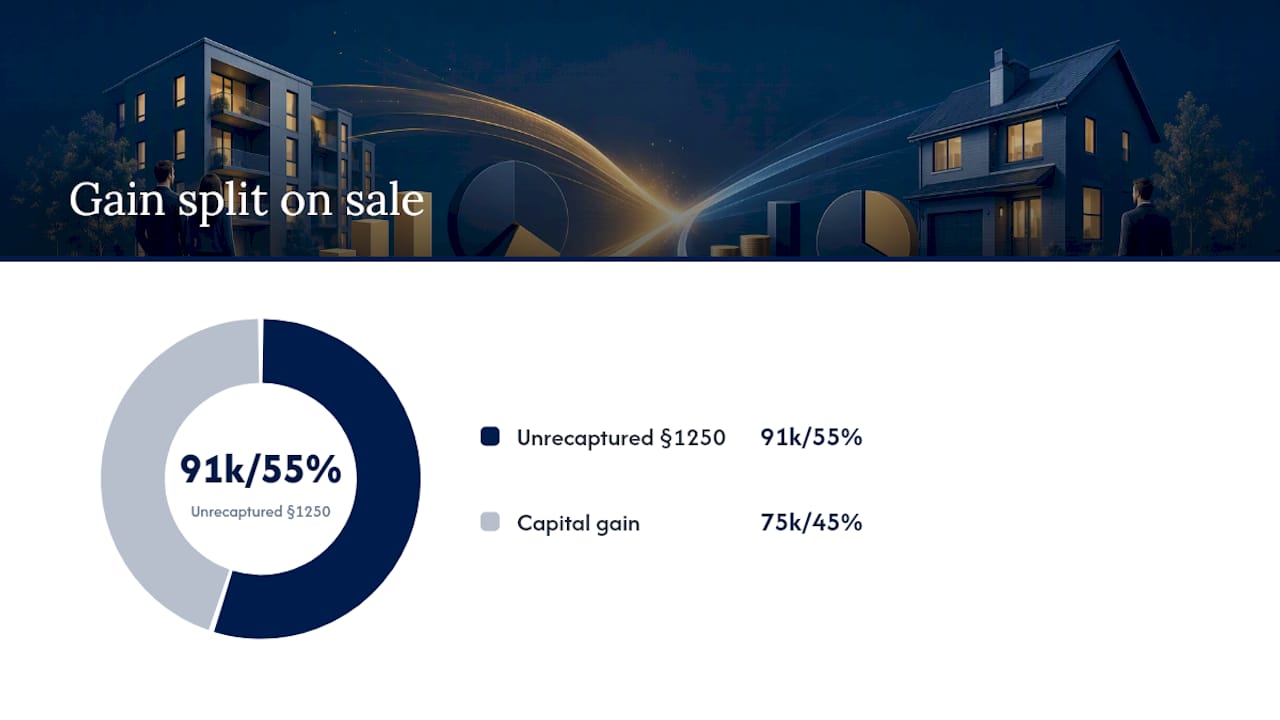
Worked example: Say you bought a rental for $300,000 (with $60,000 allocated to land, leaving $240,000 depreciable), held it for 10 years, and claimed $87,000 in straight-line depreciation on the building. You also spent $15,000 on a new roof three years in, which you depreciated separately, adding another $4,000 in accumulated depreciation. Total accumulated depreciation: $91,000.
Your adjusted basis: $300,000 (original) + $15,000 (improvement) − $91,000 (depreciation) = $224,000.
You sell for $410,000, with $20,000 in selling costs, netting $390,000. Realized gain: $390,000 − $224,000 = $166,000.
Of that $166,000 gain, $91,000 is unrecaptured §1250 gain, taxed at a maximum rate of 25%, for roughly $22,750 in federal tax on that layer alone.
If your modified adjusted gross income exceeds the Net Investment Income Tax thresholds ($200,000 for single filers, $250,000 for married filing jointly), add another 3.8% on top of both the recapture and the capital gain portion. In this example, that could mean an additional $6,300 or more, depending on how much of your total income falls above the threshold.
Pro Tip: Run this math before you list the property, not after you accept an offer. Buyers and sellers negotiate purchase price allocation on the closing statement, and that allocation directly changes how much of your gain gets recaptured versus taxed as capital gain.
All of this flows through Form 4797, Sales of Business Property, which calculates the recapture amount and carries the results to your Form 1040. If you’re selling via an installment sale, recapture on depreciation still gets recognized in full in the year of sale, even though you’re collecting payments over multiple years. Only the capital gain portion above recapture can be spread across installment payments.
Section 1245 vs. Section 1250: Why the Tax Rate Depends on the Asset
Not all depreciation gets taxed back the same way, and this is where cost segregation studies can quietly create a bigger tax bill than owners planned for.
Section 1250 covers the building structure itself, walls, roof, foundation, and the depreciation on that structure is what creates “unrecaptured §1250 gain,” capped at a maximum 25% rate.
Section 1245 covers personal property and certain land improvements: appliances, carpeting, removable fixtures, parking lots, fencing, and specialized equipment. Depreciation recaptured under §1245 is taxed at your full ordinary income rate, with no cap.
Common items that get reclassified from §1250 to §1245 through a cost segregation study include:
- Carpeting and other removable flooring
- Kitchen appliances and cabinetry in certain configurations
- Parking lots, sidewalks, and site improvements
- Decorative lighting and specialty electrical work
- Landscaping and irrigation systems
Cost segregation accelerates your deductions in the early years of ownership, which helps cash flow while you hold the property. But Thomson Reuters notes that the same acceleration increases your ordinary-rate recapture exposure at sale, since more of your accumulated depreciation now sits in the §1245 bucket instead of the lower-taxed §1250 bucket.
Pro Tip: Before you commission a cost segregation study, model the exit tax alongside the current-year deduction. A study that saves you $40,000 in taxes today might cost you an extra $8,000 to $10,000 at sale if a meaningful share of that depreciation gets reclassified into ordinary-rate recapture instead of capped §1250 gain.
Reporting Recapture: Forms, Records, and Filing Steps
Depreciation recapture gets reported on Form 4797, Part III, where you calculate the recaptured amount based on the asset’s depreciation history and sale allocation. The recapture amount then flows to Form 1040, with the ordinary-income portion typically landing on Schedule 1, and the capital gain portion carrying to Schedule D.
Before you get anywhere near closing, gather these records:
- Your full depreciation schedule from the year the property was placed in service through the sale year
- Invoices and dates for every capital improvement, since these adjust both basis and depreciation calculations
- The original purchase closing statement, showing your land versus building allocation
- The sale closing statement, showing the buyer’s allocation of price across land, building, and personal property
State income tax adds another layer. Most states with an income tax follow the federal recapture treatment, but rates and conformity rules vary, so a sale that clears $91,000 in federal recapture might also trigger state tax on the same amount at your state’s ordinary or capital gains rate. Check your specific state’s conformity rules rather than assuming federal treatment carries over automatically.
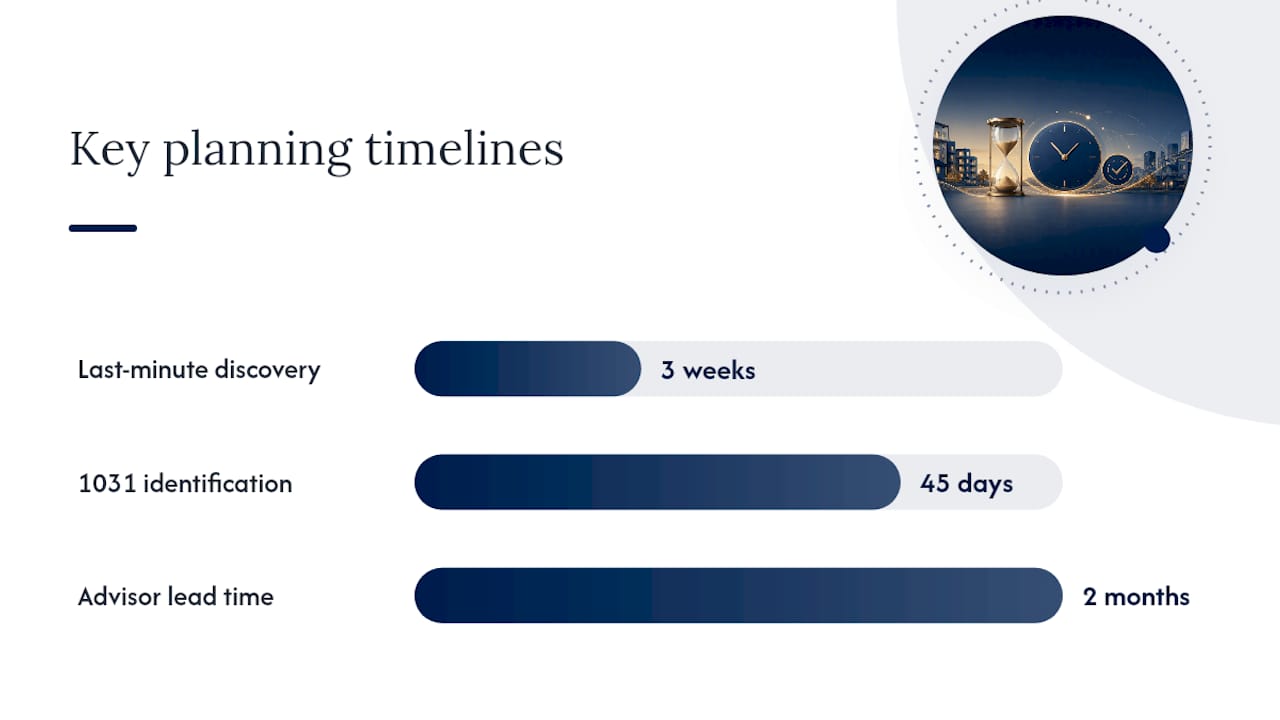
The most common filing traps we see: owners who never depreciated the property properly and have to reconstruct years of missing schedules, and buyer/seller disputes over price allocation that shift tax liability without either side realizing it until the return is prepared. Bring your depreciation schedule and improvement records to your CPA at least 60 days before closing, not after you’ve already signed the settlement statement.
Strategies to Defer or Reduce the Recapture Bill
None of these strategies eliminate depreciation recapture permanently. They defer it, reduce it, or shift when you pay it. That distinction matters for how you plan.
- 1031 like-kind exchange. A 1031 exchange defers both capital gain and depreciation recapture when you roll proceeds into another investment property, but it applies only to real property, not personal property components identified through cost segregation. There are specific deadlines to identify and close on a replacement property for a 1031 exchange, as defined by IRS rules., and your depreciation basis carries over into the new property rather than resetting. Components reclassified as §1245 personal property need careful handling in your exchange documents since they may not qualify for like-kind treatment the same way the real property does.
- Hold until death for a step-up in basis. If you hold the property until death rather than selling, your heirs generally receive a stepped-up basis equal to fair market value at the date of death, which can eliminate the built-in recapture liability entirely for the estate. This isn’t a sale strategy, it’s an estate planning decision, and it comes with its own complications around estate tax thresholds, family liquidity needs, and whether your heirs actually want to hold real estate.
- Installment sale. Spreading payments over multiple years can smooth out the capital gain portion of your tax liability, but depreciation recapture still gets recognized in full in the year of sale regardless of when you receive the cash. This creates a real cash-flow problem: you owe tax on recapture in year one, but you’re only collecting a fraction of the sale price that year.
- Negotiate the sale price allocation. Buyers often want more of the price allocated to personal property (faster depreciation for them), while sellers usually want more allocated to land and building (less §1245 recapture at ordinary rates). This is a real negotiation point at closing, not a formality, and a poorly negotiated allocation clause can shift thousands of dollars in tax liability between buyer and seller.
- Time the sale for a lower-income year. Since the capital gains portion of your sale and any NIIT exposure depend on your total income for the year, selling in a year when your other income is lower (a slow year for your business, a year you’re between W-2 jobs) can meaningfully reduce your total tax bill on the transaction.
Pro Tip: Model your after-tax cash from the sale under at least two scenarios (a straight sale versus a 1031 exchange) before you list the property. Owners frequently assume the exchange is automatically better, but if you actually need the cash for something other than reinvesting in real estate, deferring the tax through a 1031 only postpones a bill you’ll eventually have to pay, often at a similar or higher rate.
If reducing your overall tax exposure as an investor is the goal, it helps to zoom out from any single sale and look at how your acquisitions, depreciation elections, and exit timing work together across your portfolio. Our piece on why real estate investors overpay taxes covers the planning mistakes that compound this problem year after year.
Cost Segregation: Model the Exit Before You Accelerate
Cost segregation studies break a building into components with shorter depreciation lives, typically 5, 7, or 15 years for items like flooring, certain electrical systems, and land improvements, instead of the standard 27.5 years for residential rental structures. Paired with bonus depreciation, this can front-load a massive deduction in year one of ownership.
The trade-off shows up at sale. Every dollar of depreciation moved into a 5, 7, or 15-year §1245 bucket becomes ordinary-rate recapture instead of capped-rate §1250 recapture.
Example: An owner spends $50,000 on a cost segregation study for a $500,000 property, reclassifying $80,000 of depreciation into §1245 personal property and taking bonus depreciation to deduct most of it in year one. Five years later, they sell. If their bracket hasn’t changed, the tax savings and the tax cost roughly cancel out, and the study only produced a timing benefit, not a permanent one.
That’s not a reason to avoid cost segregation. Timing benefits have real value, especially if you’re funding growth or another acquisition with the freed-up cash. It’s a reason to run the numbers both directions before you commit:
- Estimate the deduction value at your current marginal rate
- Estimate the recapture cost at your expected marginal rate when you plan to sell
- Factor in whether you plan to hold long enough for a 1031 exchange or step-up to apply instead
Always run this before-and-after model with your CPA, not after the accelerated depreciation is already on your return.
TrueMeasure’s Seller Checklist for Rental Property Owners
Most of the tax pain from depreciation recapture doesn’t come from the rules themselves. It comes from finding out about them three weeks before closing, when there’s no time left to plan. Here’s the checklist we walk clients through before they list a rental property.
- Reconcile your depreciation schedule now, not at closing. Pull every year’s depreciation from your tax returns and confirm it matches what should have been claimed under MACRS. Gaps here mean surprises at sale.
- Request a written exit-tax estimate before you list. Get an actual number for recapture, capital gains, and potential NIIT exposure based on a realistic sale price. This tells you what you’ll actually net, not just your gross sale price.
- Confirm the sale allocation language in your purchase agreement early. Don’t let the buyer’s attorney draft the allocation clause without your input. This single clause can shift real dollars in recapture exposure.
- If you’re considering a 1031 exchange, engage a qualified intermediary before you accept an offer. The 45-day identification clock starts at closing, and you cannot touch the sale proceeds directly or you’ll disqualify the exchange.
- Plan your closing cash flow for the tax bill, not just the net proceeds. Recapture tax is due with your return, which may be many months after you receive sale proceeds. Set aside the estimated liability rather than spending against the full sale price.
- If using an installment sale, model the recapture recognition separately from the payment schedule. You’ll owe recapture tax in year one even though you’re collecting payments over several years.
Pro Tip: Bring your depreciation schedule and closing documents to a fractional CFO or tax advisor at least two months before you plan to list, not after you have a signed contract. Once the sale price and allocation are locked in, your planning options shrink fast.
Each item on this checklist maps to something we actually do for clients. A depreciation schedule reconciliation is part of QuickBooks cleanup and catch-up work. An exit-tax estimate and cash-flow plan for closing is fractional CFO territory. And if you’re rolling proceeds into a new property, 1031 exchange accounting needs to be set up correctly from day one, not reconstructed after the fact.
How Improvements and Capital Expenditures Change the Recapture Math
Every capital improvement you make to a rental property does two things simultaneously: it raises your adjusted basis, and it creates a new, separate depreciation schedule for that specific improvement.
A $20,000 roof replacement in year six of ownership doesn’t just add to your basis. It starts its own 27.5-year depreciation clock (for residential property) running alongside your original building’s depreciation. When you sell, the accumulated depreciation on that roof, however much of the 27.5 years has elapsed, adds to your total recapture calculation separately from the original structure’s depreciation.
This creates a layering effect that a lot of owners miss when they estimate their tax bill informally. If you’ve made four or five improvements over a 15-year hold (a new roof, a kitchen remodel, an HVAC replacement, new flooring), you don’t have one depreciation number to track. You have five, each with a different placed-in-service date and a different amount of accumulated depreciation at the time of sale.
The practical implication: your depreciation schedule needs to itemize each improvement separately, not lump them into a single running total. Get this wrong and you’ll either overstate your basis (understating your gain and underpaying tax, which creates exposure) or understate it (overpaying unnecessarily). Either mistake gets expensive at the scale of a real estate sale.
What Landlords Consistently Get Wrong About Recapture
The single biggest mistake I see is owners who budget for capital gains tax on a sale and completely forget about recapture, then get blind sided by a tax bill thousands of dollars higher than they modeled. Recapture isn’t a rounding error. On a property held ten-plus years, it’s often the largest line item on the closing statement.
The second mistake is worse: landlords who skip depreciation on their tax return, thinking they’re avoiding a future problem. You’re not. The IRS taxes you on allowed or allowable depreciation regardless, so you’re giving up a real deduction now while still owing the recapture later.
The fix isn’t complicated. Model your exit tax when you acquire the property, update it every time you make a capital improvement or consider a cost segregation study, and bring in a fractional CFO or tax specialist before you list, not after you’ve signed a contract with a 30-day close.
— Tony
How TrueMeasure Helps You Plan the Exit, Not Just File the Return
Depreciation recapture is a math problem you can see coming years in advance, which means it’s also a math problem you can plan around, if someone is actually tracking your depreciation schedule and modeling your exit tax before you need the number. Truemeasureaccounting builds that modeling into ongoing work for real estate investors and owner-operated businesses that hold rental property, instead of leaving it as a surprise your CPA calculates in April.
That means a depreciation schedule that’s reconciled and itemized by improvement, an exit-tax estimate you can request before you list a property, and 1031 exchange accounting set up correctly from the start if you’re planning to defer the gain. For owners weighing whether a cost segregation study makes sense given their expected holding period, our fractional CFO services run the before-and-after numbers so the acceleration decision is based on your actual exit plan, not a generic rule of thumb. If your depreciation records are scattered across old spreadsheets or a QuickBooks file that hasn’t been reconciled in years, our bookkeeping services rebuild that schedule so the number your CPA uses at sale is accurate. Contact TrueMeasure Accounting to get a written exit-tax estimate before your next rental property sale.
Sources
This article is general information, not a substitute for advice from a qualified financial advisor. Consult a qualified financial professional about your own circumstances before acting on anything here.
FAQ
Is There Depreciation Recapture When You Sell a Rental Property?
Yes, whenever you sell for more than your adjusted basis.
How Can You Avoid Depreciation Recapture on a Rental Property?
You generally can’t avoid it outright, only defer or reduce it, most commonly through a 1031 like-kind exchange, holding the property until death for a step-up in basis, or negotiating the sale allocation to shift value away from §1245 personal property.
What Is the Tax Rate for Depreciation Recapture on a Rental Property?
Unrecaptured §1250 gain (the building structure) is capped at a maximum 25% rate, while §1245 recapture (personal property and certain land improvements) is taxed at your ordinary income rate with no cap.
Is Depreciation Recapture Always 25%?
No.
Does the Net Investment Income Tax Apply to Depreciation Recapture?
It can. If your modified adjusted gross income exceeds $200,000 (single) or $250,000 (married filing jointly), the 3.8% NIIT can apply on top of both the recapture and capital gain portions of your sale.