

Fuel expense mismanagement is the leading cause of undetected profit loss in trucking operations. Fuel accounts for 20–40% of operating costs for most fleets, yet the tracking methods most companies rely on are aggregate, manual, or incomplete. That gap between what you spend and what you actually record creates a financial blind spot that quietly drains your margins. Understanding why trucking companies mistrack fuel expenses is the first step toward closing that gap and protecting your bottom line.
Why do trucking companies mistrack fuel expenses?
Fuel mistracking in trucking is a structural problem, not just a bookkeeping oversight. Most fleets record total fuel spend by pulling reports from fuel cards like WEX or Comdata, then posting a lump sum to their accounting software. That approach confirms money left the account. It does not confirm where the fuel went, who used it, or whether the transaction was legitimate.
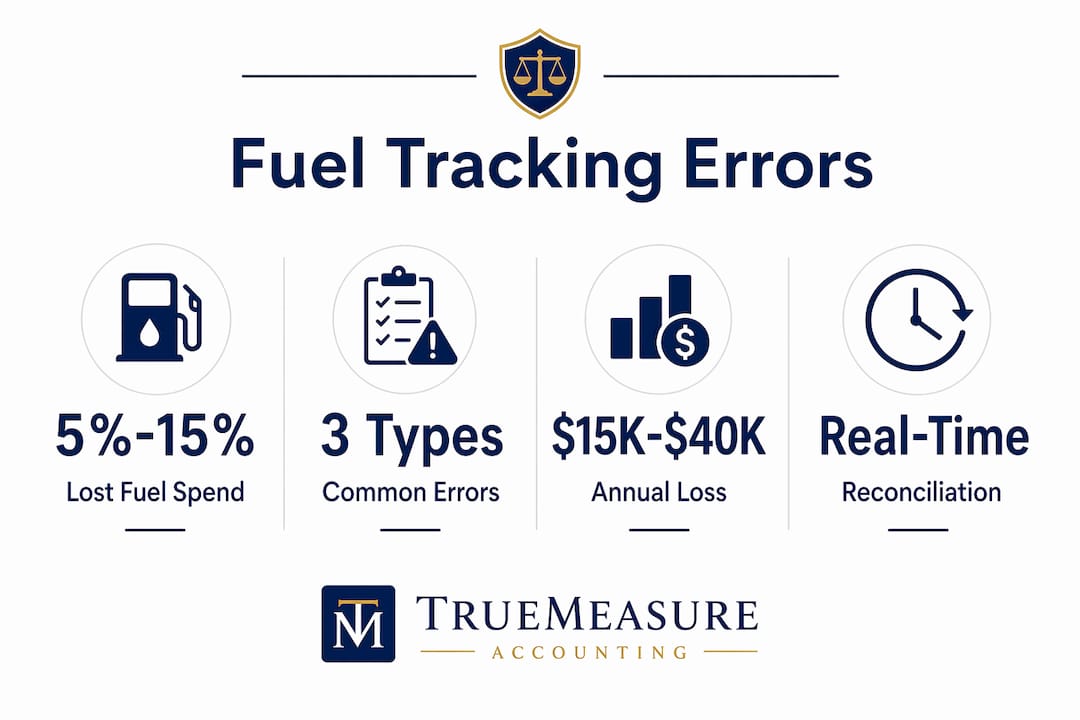
The industry term for what most fleets need is fuel intelligence, which means transaction-level monitoring that ties each gallon purchased to a specific vehicle, driver, route, and jurisdiction. Without fuel intelligence, you are managing a budget category, not a cost driver. The difference matters enormously when fleets without active monitoring lose 5%–15% of total fuel spend to waste, misuse, and fraud.

A 50-truck fleet can lose $15,000–$40,000 yearly to fuel discrepancies alone. That figure does not include the administrative cost of reconciling errors or the tax penalties from inaccurate IFTA filings. The problem compounds every quarter you leave it unaddressed.
What are the common types of fuel expense tracking errors?
Fuel expense tracking errors fall into two categories: external fraud and internal misuse. Both go undetected when your only audit tool is a fuel card statement.
External fraud includes:
- Card skimming and cloning. Criminals install devices at truck stop pumps to steal card data. 75% of fuel fraud is card skimming. Charges appear legitimate on statements because the card number is real.
- Vendor billing errors. Fuel suppliers occasionally invoice for quantities or grades not delivered. Without transaction-level reconciliation, these errors pass through undetected.
- Premium fuel overuse. Drivers fueling with diesel additives or premium blends not required by the vehicle spec inflate costs without any operational benefit.
Internal misuse includes:
- Buddy fueling. A driver uses a company fuel card to fill a personal vehicle or another driver’s personal truck. The fuel card confirms a purchase at the pump but does not confirm the fuel entered a fleet vehicle. Without tank-level reconciliation, this theft is invisible.
- Personal vehicle fueling. Similar to buddy fueling, but the driver fuels a non-fleet vehicle entirely. The transaction posts to your books as a legitimate fleet expense.
- Physical siphoning. Fuel is removed directly from fleet tanks, often overnight at a yard. This shows up as a consumption anomaly only if you track expected versus actual fuel levels by vehicle.
Data silo errors are the third category and the most common. Telematics systems like Samsara or Motive track mileage and location. Fuel cards track purchases. Accounting software tracks spend. When these three systems do not talk to each other, you get mismatched data, duplicate entries, and IFTA reporting errors that trigger audits.
Pro Tip: Set a fuel card spending limit by vehicle class and require odometer entry at every fill. These two controls alone eliminate a significant portion of internal misuse without requiring new software.
Why do manual and aggregate tracking methods cause discrepancies?
Manual fuel tracking fails for a specific reason: it confirms spending without explaining behavior. Here is how the failure chain works in practice.
-
Labor consumption. Manual fuel log reconciliation consumes 65–100 hours of administrative labor per reporting cycle. That time is spent matching paper receipts to card statements, not analyzing patterns or catching fraud.
-
No transaction-level visibility. Spreadsheets and paper logs record totals. They do not flag when a driver fills up 40 gallons in a truck with a 30-gallon tank. That anomaly is a clear fraud signal, but it only appears when you track at the transaction level.
-
IFTA reporting gaps. The International Fuel Tax Agreement requires trucking companies to report fuel purchased and miles driven by jurisdiction. When telematics and fuel card data remain siloed by system, jurisdictional mismatches create filing errors. A 200-truck fleet loses 3–5% of annual fuel spend due to these reporting gaps, plus exposure to audit penalties.
-
Missed tax rebates. Fuel tax rebates and off-road diesel credits require accurate purchase records by fuel type and use. Manual systems routinely miss these because the data is not organized by category at the point of entry.
-
Aggregation hides behavioral patterns. When you post $18,000 in fuel for the month, you cannot see that one driver consistently fuels at locations 30% more expensive than the fleet average. Aggregate numbers obscure the individual behaviors that drive costs up.
Automation changes the math. Integrated fuel management platforms reconcile purchases against telematics data in real time, flag anomalies automatically, and generate IFTA reports without manual entry. The payback period for automation is 9–14 months, which makes it one of the fastest-returning investments in fleet operations.
How do driver behaviors cause fuel expense mismanagement?
Driver behavior is the most underestimated source of fuel expense errors. Fraud gets attention because it feels like a crime. Behavioral inefficiency costs just as much and is entirely legal, which makes it harder to address without data.
The key behavioral drivers of fuel mismanagement include:
- Excessive idle time. Idle time and hidden costs account for 20–35% of operating expenses in fleets that lack measurement infrastructure. A long-haul truck idling for 10 hours burns roughly one gallon per hour. Multiply that across a 20-truck fleet over a year and the loss is substantial.
- High-cost fueling locations. Drivers often fuel at the nearest or most convenient truck stop rather than the most cost-effective one. Without a preferred fuel network or routing guidance, this habit adds meaningful cost per mile over time.
- Inconsistent driving technique. Hard acceleration, late braking, and high-speed cruising all reduce miles per gallon. These habits are invisible without telematics data tied to fuel consumption by driver.
- Unauthorized fuel use. Drivers running personal errands in company vehicles, or using fleet trucks for side work, generate fuel charges that appear legitimate in the books but represent pure loss to the business.
- Lack of coaching. The root cause of most behavioral fuel waste is not bad intent. It is the absence of feedback. Drivers who never see their fuel efficiency data have no reason to change their habits.
Pro Tip: Share monthly fuel efficiency rankings with your drivers. Fleets that publish driver-level MPG data and tie small bonuses to improvement consistently see fuel costs drop without any technology investment.
The connection between driver behavior and trucking profitability is direct. Every gallon wasted through idle time or inefficient routing is a gallon that reduces your net margin on that load.
What are the best approaches to improve fuel expense accuracy?
Improving fuel expense accuracy requires three things working together: granular data capture, automated reconciliation, and behavioral accountability. No single tool solves all three.
| Approach | What it does | Primary benefit |
|---|---|---|
| Transaction-level fuel cards | Captures driver ID, odometer, gallons, location per fill | Enables fraud detection and behavioral analysis |
| Telematics integration | Links mileage and location data to fuel purchases by jurisdiction | Accurate IFTA reporting and idle time tracking |
| Automated reconciliation | Matches fuel card data to telematics and accounting records | Eliminates manual labor and catches discrepancies in real time |
| Driver coaching programs | Uses fuel efficiency data to provide individual feedback | Reduces idle time, improves MPG, lowers cost per mile |
| Spending controls | Sets limits by vehicle class, fuel type, and location | Blocks unauthorized purchases before they post |
One mid-size logistics fleet implemented a full fuel intelligence system and reduced fuel costs by 18%, saving $847,000 annually. The savings came from driver coaching, idle reduction, fraud detection, and better routing combined. No single lever produced that result alone.
Telematics platforms like Samsara and Motive now integrate directly with major fuel card networks, making real-time reconciliation achievable for fleets of any size. The key is configuring the integration so data flows into your accounting system at the transaction level, not as a monthly summary.
The financial return extends beyond fraud prevention. Soft savings from fuel tracking systems, including reduced administrative work, faster reporting, and better supplier negotiations, can increase total recognized ROI by 30–40%. Most fleet managers focus on the hard savings from theft prevention and miss this additional return entirely.
For IFTA compliance specifically, the standard is clear: reconciliation at the point of purchase by jurisdiction is required for accurate tax filings and audit protection. Fleets that reconcile monthly instead of in real time are filing estimates, not facts. That distinction matters when an auditor asks for documentation.
Setting up your trucking bookkeeping system to capture fuel data at the transaction level from the start is far easier than cleaning up two years of aggregate records after an audit notice arrives.
Key Takeaways
Trucking companies mistrack fuel expenses because aggregate and manual tracking methods hide the transaction-level data needed to detect fraud, behavioral waste, and reporting errors before they compound into significant losses.
| Point | Details |
|---|---|
| Aggregate tracking is the core problem | Posting lump-sum fuel spend hides fraud, idle waste, and behavioral inefficiency at the driver level. |
| Fraud is larger than most owners realize | Fleets without active monitoring lose 5%–15% of fuel spend; 75% of fuel fraud originates from card skimming. |
| Manual processes create compliance risk | Manual fuel logs consume 65–100 hours per cycle and cause IFTA filing errors that trigger audits and penalties. |
| Driver behavior drives hidden costs | Idle time and inefficient fueling habits account for 20–35% of operating expenses in fleets without measurement tools. |
| Integrated systems deliver measurable ROI | Fuel intelligence implementation can reduce fuel costs by 18% and increase total ROI by 30–40% when soft savings are included. |
The real fuel problem is not the price at the pump
Fleet owners spend a lot of energy watching diesel prices. I understand why. Fuel is the biggest line item, and price swings feel out of your control. But in my experience working with trucking businesses, most fuel cost problems are structural, not external. The price at the pump is not what is draining your margins. Your internal tracking gaps are.
I have seen owner-operators running 10 trucks who had no idea two of their drivers were consistently fueling at locations 25% more expensive than the fleet average. Not fraud. Just habit. The fix took one conversation backed by three months of data. That conversation was impossible without transaction-level records.
The owners who control fuel costs best are not the ones who found the cheapest fuel network. They are the ones who built disciplined systems around fuel expense monitoring and then held their teams accountable to the data. Routing, idle audits, driver coaching, and automated IFTA reconciliation compound over time. Chasing a two-cent discount per gallon does not.
The ROI on visibility is real. A fleet that invests in fuel intelligence and integrates it with their accounting does not just save money on fuel. They gain a financial picture clear enough to make better pricing decisions, better hiring decisions, and better growth decisions. That is the actual value of fixing your fuel tracking.
— Tony
How Truemeasureaccounting helps trucking companies control fuel costs
Fuel expense errors do not fix themselves. They accumulate quietly in your books until an audit, a cash flow squeeze, or a year-end review forces the conversation.

Truemeasureaccounting works directly with trucking companies and fleet operators to build bookkeeping systems that capture fuel expenses at the transaction level, reconcile them against operational data, and surface the discrepancies that cost you money. Our small business bookkeeping services are built for owner-operated fleets that need more than data entry. They need financial clarity that connects to real operational decisions. If your fuel numbers do not add up, a free consultation is the fastest way to find out why.
FAQ
What percentage of fuel spend do fleets lose to mismanagement?
Fleets without active fuel monitoring lose 5%–15% of total fuel spend to waste, misuse, and fraud. Internal misuse alone accounts for 8.5% of fleet fuel budgets on average.
Why is a fuel card statement not enough for accurate tracking?
A fuel card statement confirms that money was spent at a pump. It does not confirm the fuel entered a fleet vehicle, making it insufficient to detect buddy fueling, skimming, or billing errors without additional reconciliation.
What causes IFTA filing errors in trucking companies?
IFTA errors occur when telematics mileage data and fuel card purchase data remain in separate systems. Reconciling these two data sources by jurisdiction in real time is required for accurate tax filings and audit protection.
How long does it take for fuel tracking automation to pay back?
Automated fuel tracking systems typically pay back within 9–14 months through labor savings, fraud reduction, and IFTA compliance improvements. Including soft savings like faster reporting and better supplier rates can increase total ROI by 30–40%.
What is the single most effective change a fleet can make today?
Requiring odometer entry at every fuel transaction and setting card spending limits by vehicle class eliminates a significant share of internal misuse immediately, with no new software required.