
Most trade business owners avoid financial reports because those reports are written in accounting language, not operational language. A standard P&L or balance sheet tells you what happened in aggregate. It does not tell you which job lost money, which crew ran over on labor, or whether you have enough cash to make payroll in three weeks. That mismatch is the core reason why trade business owners avoid financial reports, and it is fixable.
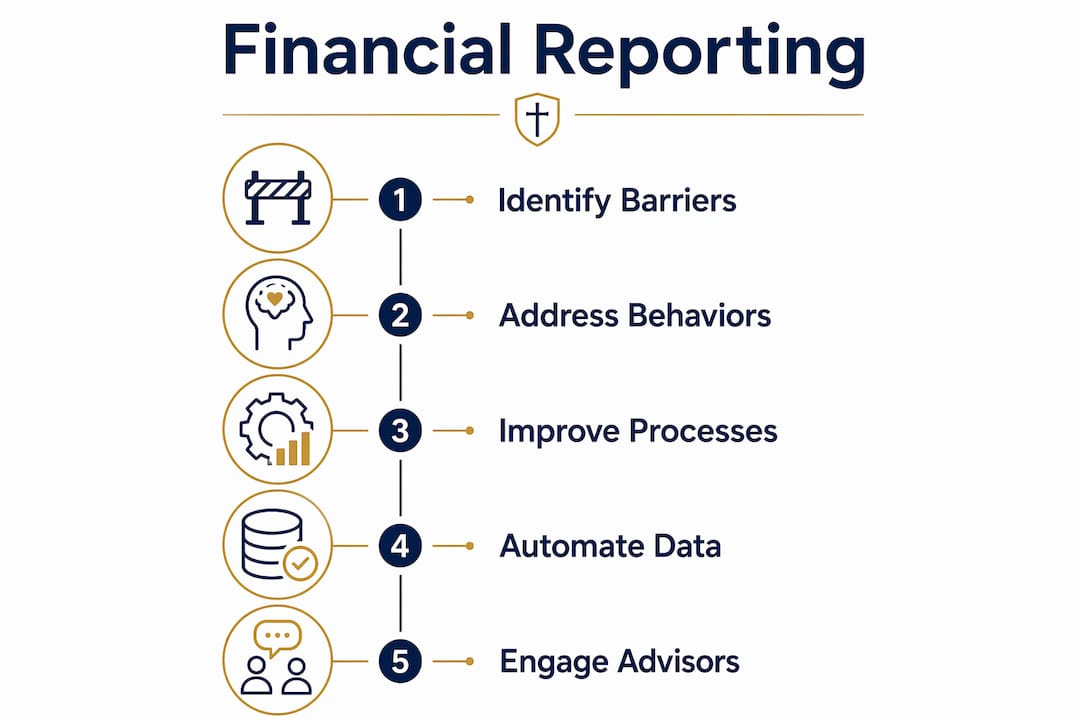
The immediate action: replace the monthly P&L review with a one-page operations-focused dashboard covering cash on hand, gross margin by job, open accounts receivable, and upcoming payables. Block 30 minutes on your calendar once a month to review it. Tools like QuickBooks, set up correctly, can generate that view automatically. Reporting standards set by FASB drive the statutory formats your accountant produces, but those formats were designed for investors and lenders, not for HVAC owners deciding whether to hire a second crew.
Switching to an operator-focused report delivers three concrete benefits:
- Faster decisions: you see job-level margin and cash runway in one view, so hiring and bidding calls take minutes instead of days.
- Fewer cash surprises: open payables and AR aging are visible before they become a crisis.
- Clearer job profitability: you know which service lines and customers actually make money.
Pro Tip: Set up a recurring 30-minute calendar block labeled “numbers review” on the same day each month. Consistency matters more than duration. Owners who review a one-page dashboard monthly catch cash problems weeks earlier than those who rely on bank balance alone.
Table of Contents
- Why financial reports feel useless to most trade owners
- Common barriers trade owners face when trying to read reports
- Reporting fatigue and legacy systems make trusting the numbers the real blocker
- What happens when trade owners ignore financial review
- Signs you need more than raw reports
- How to make financial reports work for your trade business
- Who should explain your reports: bookkeeper, CPA, or fractional CFO?
- How advisory services change the equation for trades
- How Truemeasureaccounting approaches trade businesses
- Why trade owners distrust their own financial data
- How business culture shapes financial avoidance
- When financial avoidance has cost trade businesses everything
- Key Takeaways
- The moment owners decide to change
- Truemeasureaccounting helps trade businesses get clarity fast
- Useful sources and next reads
Why financial reports feel useless to most trade owners
The structural mismatch between reports and operations is not a knowledge problem. It is a design problem. Statutory formats like the P&L and balance sheet aggregate revenue and costs across the whole business. A plumbing company with 12 active jobs sees one revenue line and one cost-of-goods line. Nothing in that view tells the owner which job is bleeding margin.

Timing makes it worse. Your bank balance today reflects deposits from jobs completed two weeks ago and does not subtract the $40,000 in vendor invoices sitting in accounts payable. Bank balance hides upcoming payables, tax liabilities, and outstanding receivables, creating a false sense of security that leads owners to greenlight spending they cannot actually afford.
A concrete example: a general contractor sees $85,000 in the bank on a Tuesday and approves a new hire. By Friday, $62,000 in subcontractor invoices come due, payroll runs, and a material supplier demands payment on a 30-day invoice. The cash crunch was invisible in the bank balance but would have been obvious in a working capital view.
Common places where standard reports create noise for trade owners:
- Revenue recognized on completion vs. cash actually collected (timing gap)
- Overhead allocated evenly across jobs rather than traced to specific crews or projects
- Equipment depreciation buried in operating expenses with no connection to job cost
- Retainage held by general contractors not reflected in available cash
Common barriers trade owners face when trying to read reports
The barriers fall into three categories: behavioral, technical, and process-related. Understanding which one is blocking you determines the fastest fix.
Behavioral barriers are often the most stubborn. Many trade owners built their business with their hands. Their identity is tied to being the best electrician or the most reliable HVAC tech in the area, not to being a finance person. Reviewing reports feels like entering someone else’s territory. Fear of bad news compounds this: the brain treats financial metrics as a potential threat and defaults to familiar, productive-feeling work instead.
Technical barriers are real and underappreciated. Many trade businesses run on a combination of spreadsheets, field apps, and a basic accounting file that were never designed to talk to each other. Reconciling those systems manually before you can trust a single number takes hours. Evolving reporting standards and increasing disclosure requirements add complexity that strains even experienced controllers, let alone a small-business owner doing their own books.
Process barriers are the easiest to fix but rarely addressed. Reports arrive in an email with no narrative, no comparison to prior periods, and no recommendation. The owner opens the PDF, sees a wall of numbers, and closes it. No dedicated review time, no agenda, no context.
Reporting fatigue and legacy systems make trusting the numbers the real blocker
The single biggest reason owners deprioritize financial review is not laziness. It is that reviewing the numbers requires hours of verification before the numbers can be trusted. Manual workarounds and fragmented systems contribute to delays of up to six months before firms reach a point where the data is clean enough to act on.
It can take firms relying on manual, fragmented spreadsheets several months to reach actionable insight from their financial data.
When reviewing a report means first reconciling three spreadsheets, cross-checking a field log, and correcting miscoded transactions, owners rationally deprioritize it. The effort-to-insight ratio is terrible. The result is avoidance, not ignorance.
Pro Tip: A QuickBooks cleanup project, typically completed in a few weeks, eliminates the reconciliation backlog that makes reports untrustworthy. Paperless jobsite reporting that feeds directly into your accounting system cuts the gap between field activity and financial data from days to hours.
Automating data pipelines and using intuitive dashboards shifts finance from a compliance exercise to a real-time operational tool. That shift is what converts avoidance into engagement.
What happens when trade owners ignore financial review
Avoidance has a price, and it compounds. The most common consequences are not dramatic collapses. They are slow, quiet margin erosion that only becomes visible when the damage is already done.
The practical consequences of skipping regular financial review:
- Cash surprises: payroll, taxes, or supplier payments arrive before receivables clear
- Mispriced jobs: without job-level cost data, owners reprice next year’s bids using gut feel instead of actual labor and material costs
- Eroded gross margins: small overruns on materials and labor accumulate across dozens of jobs with no corrective signal
- Missed tax planning: quarterly estimates get skipped, and year-end tax liability arrives as a shock
- Weak negotiating position: lenders and suppliers ask for financials; owners without clean books get worse terms
A fast-growing electrical contractor is a useful illustration. Revenue climbs 30% year over year. The owner feels good. But gross margins have quietly dropped from 38% to 24% because labor hours per job crept up and change orders were not billed consistently. Extended receivables mean cash is always tight despite strong revenue. By the time the pattern is visible, the business needs a line of credit just to cover payroll.
Owners seeking capital face an additional risk. Lenders and investors read financial statements closely. Disorganized books or inconsistent job costing signals operational risk and reduces both loan approval odds and valuation multiples.
Signs you need more than raw reports
Raw P&Ls and balance sheets are a starting point, not a management tool. These are the signals that you have outgrown them.
Operational red flags:
- You check the bank balance before approving any purchase over $500
- Month-end closes with a surprise: either more cash than expected or a shortfall you did not see coming
- Foremen or project managers dispute job cost allocations because the numbers do not match what happened in the field
- Invoices sit unpaid for 45+ days with no systematic follow-up
- You have written off jobs as losses without understanding why they went over
Time red flags:
- You or your bookkeeper spend more than four hours a month reconciling spreadsheets before you can review anything
- Financial review gets pushed to “when things slow down,” which never happens
Growth red flags:
- You are bidding new work without knowing the actual margin on your last 10 jobs
- A banker or bonding agent has asked for financials and you felt unprepared
How to make financial reports work for your trade business
The goal is a system where reviewing your numbers takes 30–60 minutes a month and produces at least one clear decision. Here is the sequence.
Immediate steps (first 30 days):
- Clean your QuickBooks chart of accounts so job costs are separated from overhead
- Reconcile bank accounts and accounts receivable to establish a clean baseline
- Standardize job codes so every transaction ties to a specific project or service line
- Build or request a one-page dashboard: cash on hand, gross margin by job, AR aging, and upcoming payables
Monthly review agenda (30–60 minutes):
- Cash runway: how many weeks of operating expenses does current cash cover?
- Top 3 job variances: which jobs ran over budget and why?
- AR over 30 days: who owes you money and what is the follow-up plan?
- Upcoming payables: what is due in the next 30 days?
- Crew capacity signal: do current backlog and margin support adding headcount?
KPIs that matter for trade businesses:
- Gross margin by job (target varies by trade; know your baseline)
- Labor efficiency: productive hours billed vs. hours paid
- AR aging: percentage of receivables over 30 and 60 days
- Backlog value and backlog-to-capacity ratio
- Change order rate and change order close rate
Realistic timelines: QuickBooks cleanup typically takes 2–6 weeks. Dashboard setup runs 1–2 weeks once the data is clean. A consistent monthly review cadence is usually established within the first 30 days of having a clean system. Operational efficiency metrics tied to financial data give you the leading indicators that a P&L alone cannot provide.
Task management errors in the field often show up first in job cost variances. Catching them in the monthly review prevents them from becoming a margin problem.
Who should explain your reports: bookkeeper, CPA, or fractional CFO?
The right answer depends on what you actually need, not on who you already have.
Bookkeeper: handles daily transaction coding, bank reconciliations, and accounts payable and receivable. A good bookkeeper keeps your data accurate and current. They are not typically responsible for interpreting what the numbers mean or connecting them to operational decisions. Cost ranges vary widely by market and scope.
CPA: handles tax compliance, annual filings, and audit support. A CPA’s value is in minimizing tax liability and keeping you compliant. Most CPAs are not set up to provide monthly operational commentary or job-level analysis. Their engagement is typically annual or quarterly.
Fractional CFO: provides ongoing strategic advisory, cash flow forecasting, KPI design, pricing analysis, and decision support. This is the role that converts accurate data into operational decisions. For trade businesses generating $500,000 to $5 million in revenue, a fractional CFO typically costs a fraction of a full-time hire while delivering the same strategic output. When to hire a financial advisor comes down to one question: are you making major decisions without confidence in your numbers?
Recommended sequence for most trade businesses: start with a bookkeeping cleanup to establish data accuracy, add a one-page dashboard, then layer in fractional CFO advisory when cash pressure, growth, or pricing complexity demands it.
How advisory services change the equation for trades
The difference between having accurate books and having a financial advisor is the difference between owning a GPS and knowing how to use it to avoid traffic. The data alone does not make the decision. The interpretation does.
Advisory services for trade businesses typically produce these outcomes:
- Improved job costing: costs are traced to specific jobs, so overruns are caught in real time rather than at project close
- Predictable cash runway: rolling 13-week cash forecasts replace bank-balance guessing
- Consistent pricing discipline: bids are built from actual labor and material costs, not memory
- Fewer month-end surprises: payables, payroll, and tax obligations are visible weeks in advance
- Better hiring timing: backlog data and margin trends tell you when adding a crew is financially supported
Collaboration between a financial advisor and field operations creates buy-in that pure accounting never achieves. When a foreman sees that job cost data directly affects crew scheduling and equipment purchasing decisions, they start caring about accurate time tracking. The numbers stop being an accounting exercise and become a shared operational tool.
How Truemeasureaccounting approaches trade businesses
Truemeasureaccounting was founded by Anthony Boncimino, an entrepreneur with more than 20 years of experience building and operating multi-million-dollar service businesses. That background shapes every engagement. The firm does not start with accounting rules. It starts with the operational question: what decisions does this owner need to make, and what data do they need to make them confidently?
The process follows a consistent sequence: data-first cleanup, mapping chart of accounts to job codes and service lines, building a one-page operational dashboard, and then establishing a monthly advisory cadence tied to real business decisions.
Services available for trade businesses:
- Monthly bookkeeping and reconciliations
- QuickBooks cleanup and catch-up projects
- Financial reporting and KPI tracking
- Cash flow management and forecasting
- Job costing and profitability analysis by project, customer, or crew
- Fractional CFO and financial advisory services
One pattern appears consistently across HVAC, plumbing, electrical, and construction clients: owners who switch from reviewing a standard P&L to reviewing a job-level dashboard with gross margin, AR aging, and cash runway make faster, more confident decisions within the first 60 days. The reports did not change. The format did.
Why trade owners distrust their own financial data
Distrust of financial data is not irrational. For many trade owners, the numbers have been wrong before. A bookkeeper miscoded expenses. QuickBooks was not reconciled for six months. The P&L showed a profit while the bank account was empty. Those experiences create a reasonable conclusion: the reports cannot be trusted, so why review them?
Loss aversion compounds this. Negative financial signals trigger a stronger avoidance response than equivalent positive signals encourage engagement. An owner who opened a report and found an unexpected loss is more likely to avoid the next report than an owner who found an unexpected gain is likely to review more frequently. This is not a character flaw. It is how the brain processes financial threat.
Denial of poor performance is a related pattern. A contractor who knows intuitively that margins are slipping may avoid confirmation because confirmation requires action. Staying busy feels safer than confronting a number that demands a hard conversation with a customer or a crew.
The fix is not motivation. It is structure. Neutral, repeatable reporting rituals, a consistent format, a short agenda, and a trusted advisor who frames the numbers as operational feedback rather than a report card, reduce the threat response over time.
How business culture shapes financial avoidance
Trade businesses run on a culture of doing. The highest-status person in most HVAC or construction companies is the one who solves problems in the field, not the one who reviews spreadsheets. Financial review is implicitly coded as administrative overhead, not real work.
That culture filters hiring decisions, too. Many trade owners hire bookkeepers who handle compliance tasks and stay out of the way. The expectation is data entry, not insight. When the bookkeeper delivers a report with no narrative and no recommendation, the owner files it and moves on.
Owner-led identity reinforces avoidance. Asking for help with finances can feel like admitting you do not know how to run your own business. That ego barrier delays delegation to a fractional CFO or financial advisor until a crisis forces the issue. By then, the cleanup is more expensive and the decisions are more constrained.
Changing the culture starts with reframing what financial review means. It is not accounting. It is operations intelligence. The monthly dashboard is the same kind of tool as a job schedule or a crew capacity board. When owners see it that way, resistance drops.
When financial avoidance has cost trade businesses everything
The pattern is consistent across trade sector failures: the business looked healthy from the outside until it did not. Revenue was strong. The owner was busy. The warning signs were in the financials, but nobody was reading them.
A plumbing company scaling from $800,000 to $2.5 million in three years is a common scenario. Revenue growth masks margin compression. Labor costs rise as the owner hires to keep up with demand. Material costs increase but bids are not adjusted. Gross margin drops from 42% to 28% over 18 months. The owner does not see it because the bank balance is always positive until receivables slow down during a seasonal dip. Then payroll, taxes, and supplier payments all land in the same two-week window. The line of credit is maxed. The owner is forced to take on low-margin emergency work just to cover fixed costs.
None of that is inevitable. A monthly review of gross margin by job and AR aging would have flagged the margin compression within the first quarter it appeared. The corrective action, repricing, tighter change order management, and a collections process, is straightforward when caught early. It is a crisis when caught late.
Why profitable businesses run out of cash is one of the most misunderstood dynamics in trade businesses. Revenue and cash are not the same thing, and the gap between them is where businesses fail.
Key Takeaways
Trade business owners avoid financial reports primarily because those reports are built for accounting compliance, not operational decisions, and fixing that design problem is faster and less expensive than most owners expect.
| Point | Details |
|---|---|
| Reports are the wrong format | Standard P&Ls hide job-level margin; switch to a one-page operational dashboard with cash, gross margin by job, AR aging, and payables. |
| Validation time drives avoidance | Manual, fragmented systems can delay actionable insight by up to six months; a QuickBooks cleanup (2–6 weeks) removes that barrier. |
| Psychology blocks review | Loss aversion and identity factors cause avoidance; structured monthly rituals with neutral framing reduce the threat response over time. |
| Job-level KPIs are the lever | Gross margin by job, labor efficiency, AR aging, and backlog value map directly to hiring, bidding, and cash decisions. |
| Truemeasureaccounting’s approach | Truemeasureaccounting starts with data cleanup, builds a one-page operational dashboard, and provides monthly advisory tied to real trade business decisions. |
The moment owners decide to change
Most trade owners I work with did not avoid their numbers because they were careless. They avoided them because every time they opened a report, it felt like reading a document written for someone else. The format was wrong, the language was wrong, and the effort required to trust the numbers was not worth the output.
The shift happens when the report stops looking like an accounting document and starts looking like an operations tool. One page. Five numbers. Thirty minutes a month. That is enough to catch a margin problem before it becomes a cash crisis, to time a hire correctly, and to walk into a bank conversation with confidence instead of anxiety. Small, concrete changes in how the numbers are presented rewire the behavior faster than any amount of financial education.
Truemeasureaccounting helps trade businesses get clarity fast
Trade businesses generating between $250,000 and $5 million in revenue get more than clean books when they work with Truemeasureaccounting. They get a financial system designed around how their business actually operates.
A typical engagement starts with a bookkeeping cleanup completed in 30 days, followed by a one-page operational dashboard built around the KPIs that matter for your trade: gross margin by job, cash runway, AR aging, and upcoming payables. From there, monthly advisory meetings connect the numbers to real decisions on hiring, pricing, and cash management. Truemeasureaccounting serves HVAC, plumbing, electrical, construction, trucking, and other owner-operated service businesses across the United States. Book a diagnostic call today to find out exactly where your numbers stand and what it would take to make them work for you.
Useful sources and next reads
- 4 Common Financial Reporting Challenges and How to Tackle Them | Workday: explains how fragmented systems and manual validation create reporting delays and what automation fixes.
- Why Founders Ignore Financial Data | RudraCap: covers the psychological and structural reasons owners avoid financial data and the cost of that avoidance.
- Why You’re Avoiding Your Business Metrics | Amy Traugh: behavioral analysis of metric avoidance and practical steps to build a review habit.
- Tackling Complex Technical Accounting and Reporting Challenges | KPMG: shows how evolving standards and disclosure requirements increase complexity for smaller firms.
- Common Task Management Errors Tradespeople Make | DeBe Corp: operational errors in the field that create data mismatches and cost overruns.
- Financial Literacy Resources for Small Businesses | U.S. Small Business Administration: free SBA resources including SBDC advising and the MySBA Learning platform for building financial management skills.
- Why Small Businesses Need Monthly Financials | Truemeasureaccounting: practical case for a monthly review cadence and what to cover in each session.
- Improve Financial Visibility for Your Small Business | Truemeasureaccounting: step-by-step guidance on building dashboards and increasing financial visibility for owner-operated businesses.