
Reasonable compensation is the market rate wage the Internal Revenue Service expects an S corp shareholder-employee to draw as W-2 wages before taking any distributions. If you run an HVAC crew, a plumbing outfit, or a trucking operation and take profit as distributions instead of payroll, the fix is immediate: run a market-based salary calculation, put yourself on payroll, and start collecting the documentation that proves your number.
TL;DR:
- Owner-operators must pay themselves a market-based salary that reflects their actual duties, hours, and experience to avoid IRS reclassification and payroll tax penalties.
- Documented calculations should include data from BLS wage tables, detailed duty analysis, and historical pay patterns to establish a defendable reasonableness standard.
- Reassess and update salary figures annually, especially after significant business changes like revenue shifts or new partners, with proper documentation procedures.
- Use a combination of market, cost, and income approaches to triangulate a salary that aligns with industry data, business responsibilities, and capital investment.
- Maintaining contemporaneous records, such as job descriptions, time logs, and formal resolutions, is crucial to defending your compensation during audits and avoiding red flags.
Table of Contents
- What the IRS Requires and Why S Corp Reasonable Compensation Matters
- The Nine Factors Examiners and Courts Use
- Three Methods to Calculate a Defensible S Corp Reasonable Salary
- A Worked Example: Calculating Salary for an HVAC Owner-Operator
- Documentation and Contemporaneous Evidence That Survives an Audit
- Common Myths and Red Flags That Trigger IRS Scrutiny
- Payroll Mechanics: Making Your Salary Function as Wages
- When to Re-Evaluate Your S Corp Salary
- TrueMeasure’s Approach to Reasonable Compensation for Trades and Service Firms
- Get Audit-Ready Payroll and Compensation Support
- Primary Sources to Cite in Your Documentation File
- Sources
- FAQ
What the IRS Requires and Why S Corp Reasonable Compensation Matters
Treasury Regulation §1.162-7 and IRS Fact Sheet FS-2008-25 set the legal standard: if you provide more than minor services to your S corporation, you must be paid reasonable compensation before the company distributes any remaining profit to you. There’s no dollar threshold and no bright-line formula. The IRS looks at the whole picture of what you actually do for the business and what someone else would have to be paid to do it.
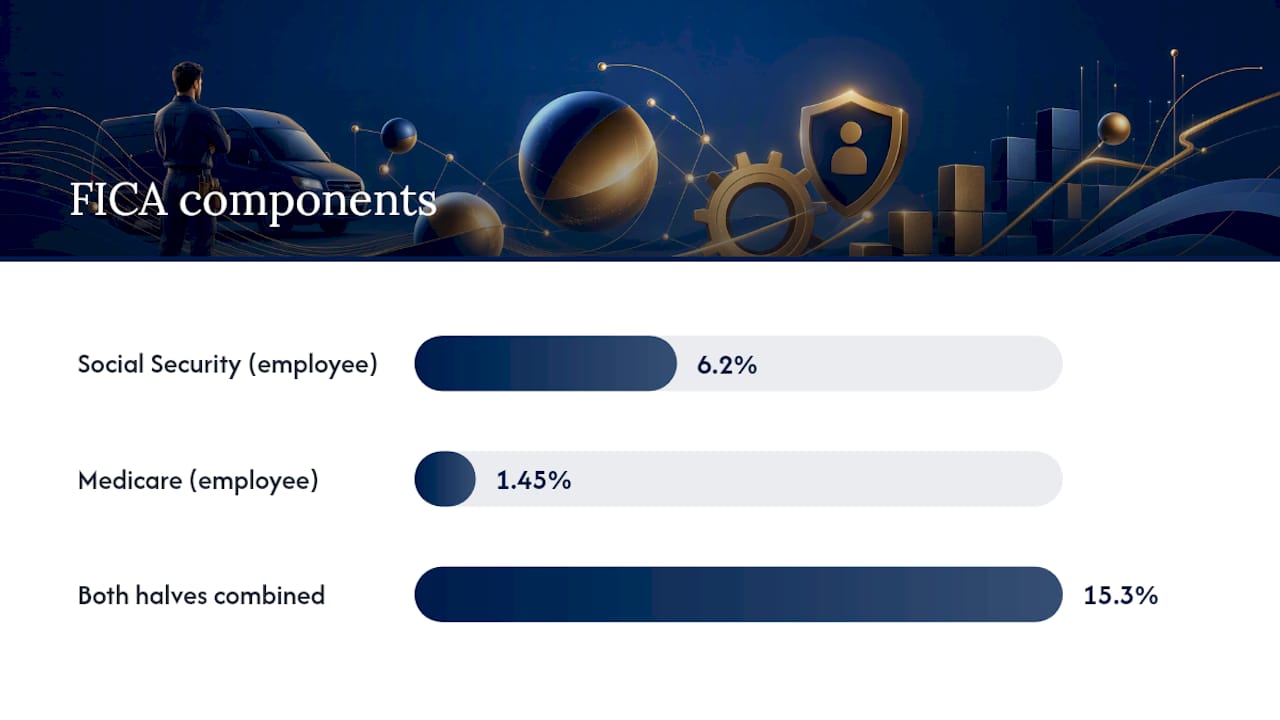
Skip this step and you’re gambling with real money. When an examiner reclassifies distributions as wages, you owe back payroll taxes on amounts you should have run through payroll in the first place. That’s the full FICA bite: 6.2% Social Security and 1.45% Medicare on the employee side, matched by the employer, for a combined 15.3% once both halves are counted. Add penalties and interest on top, and a reclassification a few years back can turn into a five-figure bill overnight.
The source of your gross receipts matters enormously here. If your revenue comes from your personal labor, as it does for most trades and service businesses, the IRS expects a wage that reflects that labor. If revenue comes mostly from capital or from employees you supervise rather than work you personally perform, a lower salary relative to distributions becomes easier to defend. This distinction is exactly why a general contractor who estimates jobs, manages crews, and closes sales gets far less latitude on a token salary than, say, a passive real estate investor collecting rent.
What this means for owner-operators specifically:
- Your salary should reflect the value of the actual work you perform, not a percentage plucked out of thin air.
- Service businesses face more scrutiny than capital-heavy operations because personal labor drives the revenue.
- Recharacterization risk compounds every year you underpay yourself, since each open tax year can be examined separately.
- The IRS has no obligation to give you the benefit of the doubt. The burden of proof sits with you.
The Nine Factors Examiners and Courts Use
There’s no safe-harbor percentage and no single formula the IRS accepts. Instead, examiners and courts apply a facts-and-circumstances test built around nine factors first articulated in Fact Sheet FS-2008-25 and refined through case law. Understanding each factor tells you exactly what to document.
- Training and experience. Keep a record of your certifications, licenses, and years in the trade. A master electrician with 20 years of experience commands a different wage than a first-year apprentice who happens to own the company.
- Duties and responsibilities. Write down what you actually do. Are you running service calls, managing dispatch, handling sales, doing the books? Each duty maps to a different market wage.
- Time and effort devoted to the business. Track your hours, even roughly, across a representative month. Forty hours a week doing hands-on service work is a different case than ten hours of oversight.
- History of distributions versus dividends. If you’ve historically paid large distributions and minimal wages, that pattern itself becomes evidence against you.
- Payments to non-owner employees. Compare what you pay a lead technician or office manager against what you pay yourself for comparable duties.
- Timing and manner of paying bonuses to key people. Bonuses that spike right before year-end, timed to minimize payroll tax, draw attention.
- Comparable businesses’ compensation for similar services. This is where BLS OEWS data earns its keep, giving you a defensible external benchmark.
- Compensation agreements. Formal employment agreements or board resolutions that predate the tax year carry real weight.
- The use of a formula to determine compensation. A documented, consistent method, applied the same way year over year, reads as legitimate rather than reverse-engineered.
In practice, three factors carry the most weight in actual audits: comparable pay data, duties and time devoted, and the history of distributions versus wages. If you document nothing else, document those three.
Three Methods to Calculate a Defensible S Corp Reasonable Salary
Practitioners generally rely on three accepted approaches, and the strongest defense usually blends more than one.
The market approach starts with occupational data. Identify the BLS occupation codes that match your duties (service manager, dispatcher, estimator, technician), then pull OEWS wage data for your metro area. Choose a percentile that reflects your skill and tenure, typically the 50th to 75th percentile for an experienced owner-operator, and adjust for local cost of labor.
The cost approach, sometimes called the many-hats method, tends to map best onto how owner-operated service businesses actually work. You itemize every distinct role the owner fills, from operations manager to lead technician to bookkeeper, assign a market wage to each role, weight each by the percentage of time it actually consumes, and sum the weighted wages into a total. This approach is well supported for smaller owner-run firms because it reflects the reality that most owners wear several hats rather than performing one clean job function.
The income approach asks what an independent investor would be willing to pay you to run the company, after leaving that investor a reasonable return on capital. It works best for capital-intensive businesses with meaningful equipment or fleet investment, like trucking companies, where a chunk of profit legitimately belongs to capital rather than labor.
To build a range you can defend, triangulate:
- Run the market approach for a baseline figure tied to comparable roles.
- Run the cost approach to check that baseline against your actual weighted duties.
- Layer in the income approach if your business carries significant capital investment.
- Land on a number where at least two of the three methods roughly agree, and document why.
A Worked Example: Calculating Salary for an HVAC Owner-Operator
Say you own a single-location HVAC company generating $900,000 in annual revenue. You personally handle service calls three days a week, manage dispatch and scheduling, and close larger commercial bids. Here’s how the math works using the cost approach anchored to BLS data.
- Break down your time. Field service work, roughly 40% of your week. Operations and dispatch management, 35%. Sales and estimating, 25%.
- Map each duty to a BLS occupation. Field service maps to HVAC mechanics and installers. Operations management maps to first-line supervisors of mechanics. Sales and estimating maps to sales representatives for technical products, all pulled from OEWS for your metro area.
- Apply the wage for each role at an appropriate percentile. A field technician at the 75th percentile might run around $34 an hour. A supervisor role at a similar percentile might run $42 an hour. A technical sales role might land near $38 an hour.
- Weight and sum. Weighted annual figures might come out to roughly $28,000 for the field share, $30,600 for operations, and $19,800 for sales, for a combined salary target in the neighborhood of $78,000.
Pro Tip: Recalculate the wage inputs every year rather than inflating last year’s number by a flat percentage. BLS OEWS data updates periodically, and a stale wage assumption is one of the easiest things for an examiner to poke holes in.
Run three sanity checks before locking in the number. First, compare it against industry-wide compensation surveys for HVAC company owners of similar revenue size. Second, check whether the business can actually sustain that payroll level without straining cash flow during slow months. Third, calculate the payroll tax exposure at that salary level so there are no surprises when the first 941 comes due. A $78,000 salary carries roughly $5,967 in FICA taxes on the employee side alone, matched by the employer, which is a cash flow line item worth planning around rather than discovering in April.
Documentation and Contemporaneous Evidence That Survives an Audit
Documentation created after the fact, or worse, after you’ve received an audit notice, carries far less weight than records built as you go. Contemporaneous documentation and board approval can materially reduce or eliminate accuracy-related penalties even in cases where the IRS ultimately reclassifies part of your compensation.
Build a file that includes:
- A written job description for every role you fill in the business.
- Time logs or a reasonable time study showing how your week actually breaks down.
- A calculation worksheet showing your source data, method, and math, not just a final number.
- Dated screenshots of the BLS OEWS wage tables you pulled for comparison.
- Signed corporate minutes or a board resolution approving the salary for the year.
- Payroll records: W-2s, quarterly 941s, and any state filings tied to that wage.
Date everything and keep the raw data, not just your conclusions. A spreadsheet with a timestamp, the original BLS query parameters, and a signature block reads as a real business record. A single unsigned number in an email reads as an afterthought. Store minutes and worksheets in the same file each year so a reviewer, whether that’s your CPA, a fractional CFO, or an IRS examiner, can trace your logic from raw wage data straight to your W-2. Keep this file for at least the duration of your statute of limitations on the relevant tax year, and longer if you’ve had any prior compensation disputes.
For a broader framework on building files that hold up under scrutiny, see audit-proof documentation practices for small businesses.
Common Myths and Red Flags That Trigger IRS Scrutiny
Enforcement guidance rejects fixed-percentage heuristics outright because reasonableness depends on your actual duties and market rate, not an arbitrary ratio applied to whatever profit happens to land that year.
Paying yourself a token salary, or nothing at all, is the riskiest position an owner-operator can take. If you provide substantial services and take large distributions with a zero or near-zero W-2, you’re an obvious target.
Watch for these red flags:
- Large annual distributions with minimal or no corresponding payroll.
- A sudden retroactive W-2 issued near year-end or after receiving an audit notice.
- Duties that clearly warrant a full-time wage paired with compensation that looks part-time or token.
- A salary that has never moved even as revenue and personal duties have grown substantially.
If you’ve underpaid yourself in prior years, don’t panic and don’t rush a fix. Issuing a single lump-sum W-2 without contemporaneous documentation behind it can itself look like a red flag rather than a correction. The safer path: run a proper historical analysis for the affected years, document the methodology the way you would going forward, and talk to your tax preparer before filing anything retroactive. Then set up regular payroll immediately so the problem doesn’t repeat. For a practical comparison of how draws and salary should actually function together, see owner draw versus salary.
Payroll Mechanics: Making Your Salary Function as Wages
A reasonable compensation number only protects you if it actually runs through payroll like wages, with tax withheld and filings made on time.
Set up a real payroll run, whether through a payroll provider or your bookkeeping team, and pay yourself on a consistent cadence, typically biweekly or semimonthly, the same as any other employee. Withhold federal income tax, Social Security, and Medicare from each check just as you would for staff.
- Deposit payroll taxes on the schedule the IRS assigns you, whether monthly or semiweekly.
- File Form 941 every quarter to report wages paid and taxes withheld.
- File Form W-2 and the transmittal Form W-3 annually, by the end of January for the prior tax year.
- Register for state unemployment tax and pay it on the wages you run, since most states require it even for a sole shareholder-employee.
- Keep payroll registers, deposit confirmations, and filed forms in the same file as your compensation calculation worksheet.
Your tax preparer or fractional CFO should review the salary figure at least annually alongside your payroll setup, since a number that made sense at $500,000 in revenue may be badly outdated at $2 million.
When to Re-Evaluate Your S Corp Salary
Review your compensation figure every year, ideally before year-end tax planning, not after you’ve already filed. At minimum, refresh your BLS wage comparisons, revisit your time allocation across duties, and confirm your documentation file is current.
Certain events call for an immediate review rather than waiting for the annual cycle: a major jump or drop in revenue, bringing on a new partner or shareholder, a shift in your day-to-day role (stepping back from field work into pure management, for instance), or preparing the business for sale. Each of these changes the facts and circumstances the IRS would look at, which means your old number may no longer hold up.
Document every change the same way you documented the original number: a new calculation worksheet, updated board minutes, and a conversation with your CPA or payroll provider so the new figure gets implemented correctly rather than just noted for next year.
TrueMeasure’s Approach to Reasonable Compensation for Trades and Service Firms
Working inside operating businesses for two decades before founding Truemeasureaccounting shapes how this firm handles compensation analysis. Most generic accounting guidance treats reasonable compensation as a compliance checkbox. It’s actually a cash flow decision with a compliance requirement attached.
A specialized accounting firm maps operational tasks, whether running service calls, managing a trucking dispatch board, or overseeing a construction crew, directly to BLS occupation codes and builds the weighted calculation from there. Capital-intensive businesses like trucking fleets often land on a different mix than labor-driven trades like plumbing or electrical work, where nearly all the value comes from the owner’s personal effort.
Clients should expect from an engagement: a documented salary range with the underlying math shown, payroll implementation that ties into bookkeeping, and an annual checkpoint to confirm the figure still fits the business as it grows.
— Tony
Get Audit-Ready Payroll and Compensation Support
Running the market analysis, mapping your duties to BLS occupations, and building the documentation file is a lot to manage on top of actually running your business. Truemeasureaccounting handles this as part of ongoing bookkeeping and payroll services built specifically for owner-operators in HVAC, plumbing, electrical, construction, and trucking.
The advantage over trying to piece this together yourself: you get a documented, audit-ready calculation and payroll setup as one continuous process, not a one-time report that goes stale the following year. For businesses ready for deeper cash flow and pricing guidance beyond payroll compliance, Truemeasureaccounting’s fractional CFO services builds compensation strategy into the broader financial picture, covering job costing, pricing, and profitability by service line. If you’re carrying distributions with no wages behind them, or you’ve never revisited your salary since you started the company, reach out to discuss your specific numbers and get a plan in place before the next filing deadline.
Primary Sources to Cite in Your Documentation File
Build your compensation file around sources an examiner would recognize as authoritative, not blog posts repeating secondhand rules.
- IRS guidance on S corporation compensation for the legal standard itself.
- IRS Fact Sheet FS-2008-25 for the nine-factor framework examiners apply.
- BLS Occupational Employment and Wage Statistics for the market wage data that anchors your calculation.
- Form 1120-S instructions for how officer compensation connects to your corporate return.
- The Tax Adviser’s practitioner guidance for how documented methodology holds up in real disputes.
Save the dated source pages themselves, not just the numbers you pulled from them, so the file shows your work.
Sources
- S corporation compensation and medical insurance issues | Internal Revenue Service
- Occupational Employment and Wage Statistics (OEWS) — Bureau of Labor Statistics
- Advising S corporation clients on reasonable compensation — The Tax Adviser
- S-Corp Reasonable Compensation in 2026 | WageProof
- Calculate a reasonable salary as an S Corp | Gusto
FAQ
What Is the 2% Rule for S Corps?
The 2% rule refers to shareholder-employees owning more than 2% of S corporation stock, who must include employer-paid health insurance in their W-2 wages for income tax purposes; it has nothing to do with calculating reasonable compensation itself.
What Is the 60/40 Rule for S Corporations?
It has no basis in IRS guidance and courts don’t apply it.
How Does the IRS Define Reasonable Compensation?
The IRS applies a facts-and-circumstances test under Treasury Regulation §1.162-7, weighing factors like your duties, time devoted, training, and comparable market pay rather than any fixed formula.
At What Income Level Is an S Corp Worth It?
There’s no single revenue threshold, but the tax savings from the S corp structure generally start outweighing the added payroll compliance costs once net business profit reaches a level typically sufficient to support a reasonable salary with meaningful distributions left over.
Can Truemeasureaccounting Help Calculate My Reasonable Salary?
Yes. Truemeasureaccounting builds market-based compensation calculations tied to BLS occupation data, implements the resulting payroll, and maintains the documentation file that supports the number if it’s ever questioned.