
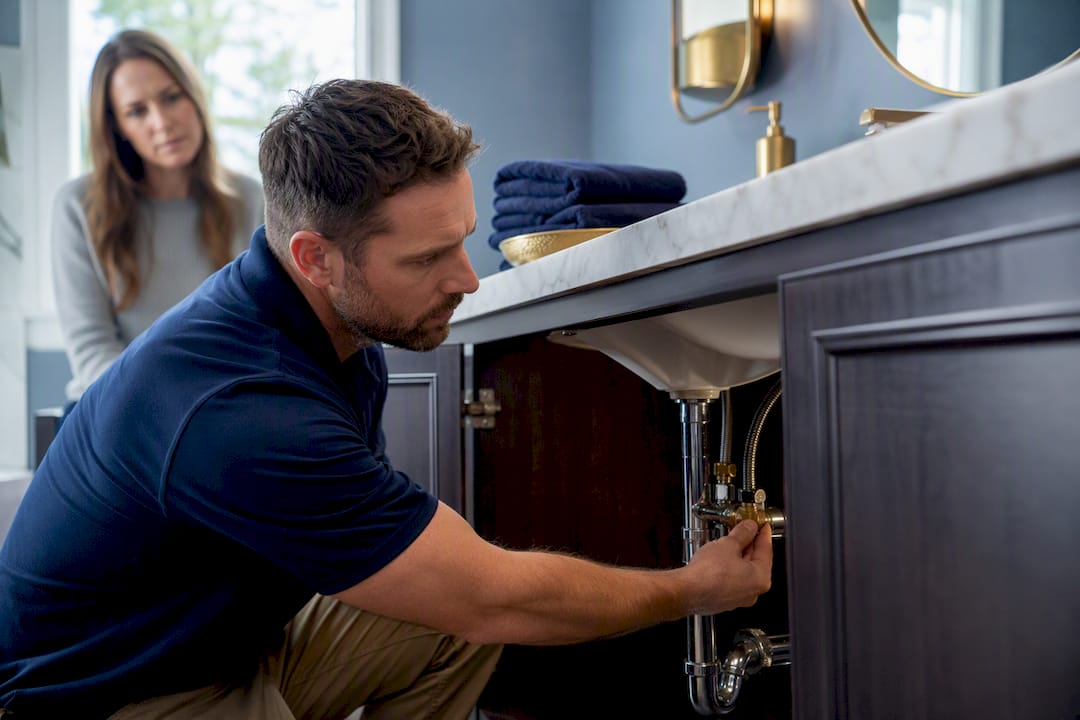
Flat rate pricing plumbing means a plumber gives you one fixed price for a job before work starts, based on the scope agreed on site, not the hours it takes to finish. It works best for repeatable, predictable repairs like a toilet swap or a drain clearing, and less well for jobs with hidden damage or unknown scope. Before you sign anything, get the scope and parts list in writing.
TL;DR:
- Flat-rate pricing is based on a detailed inspection and a fixed quote, which excludes unforeseen issues or unrelated repairs discovered during the job.
- Pricing formulas incorporate full labor burdens, parts markup, overhead, callback reserves, and profit, with rates varying by region and job complexity.
- Written scope, parts list, warranty policy, and clear explanations of exclusions should be provided before accepting a flat-rate quote.
- Typical flat-rate ranges for standard jobs fall between $125 and $535, with higher quotes often caused by access issues, premium parts, or after-hours timing.
- Contractors rely on up-to-date price books and digital tools to ensure margins cover actual costs, including callbacks and overhead, avoiding undervaluing jobs.
Table of Contents
- What flat-rate pricing actually means in practice
- Flat-rate vs. hourly: when each billing model is fair
- How plumbers calculate flat rates: the exact formula and cost components
- What a fair flat-rate quote should include
- Common flat-rate price ranges and real-world examples
- Tools, templates, and price-book resources contractors use
- How flat-rate pricing ties to contractor finances
- Author perspective: what to ask before you sign
- For plumbing business owners: building rates that actually protect margin
- Sources
What flat-rate pricing actually means in practice
A flat rate is not a guess pulled from a truck-mounted price sheet at random. A technician inspects the problem, matches it to a line in the company’s price book, and hands you a single number that covers labor and materials for that specific scope. Once you sign, that price is locked, even if the job takes longer than expected.
That protection cuts both ways. The quote only covers what’s written down.
- Scope typically excludes unrelated repairs discovered mid-job, like corroded shutoff valves behind a leaking faucet.
- A legitimate change order requires the plumber to show you the new problem and get your approval before charging more.
- Diagnostic fees often get waived once you approve the flat-rate quote, since the visit becomes billable work instead of a standalone inspection.
If a plumber wants to charge extra without explaining what changed, that’s a scope problem, not a pricing problem.
Flat-rate vs. hourly: when each billing model is fair
Flat-rate pricing works when the plumber can see the whole problem and knows exactly what fixing it requires. Time-and-materials billing exists for the opposite case: jobs where nobody knows the real scope until the wall comes open.
- Choose flat-rate for toilet installs, faucet swaps, water heater replacements, and drain clearing. The task is standard and the parts list is short.
- Expect hourly or time-and-materials billing for slab leaks, sewer line diagnostics, or any job where the plumber says “we won’t know until we open it up.”
- Watch three warning signs that push a job toward hourly territory: plumbing older than 40 years, tight or blocked access to the work area, and a history of patch repairs in the same section of pipe.
- A quick rule of thumb: if the plumber can describe the fix in one sentence after inspection, flat-rate is fair. If they need three “if this, then that” scenarios, ask for hourly with a not-to-exceed cap instead.
How plumbers calculate flat rates: the exact formula and cost components
Most shops that run a real price book use a version of this formula: Flat Rate = (Labor hours × loaded rate) + (Parts cost × markup) + overhead allocation + callback reserve + profit margin. Every piece of that equation matters, and skipping one is how contractors underprice themselves into a cash-flow hole.
- Loaded labor rate. This is not the technician’s hourly wage. It converts wages into a fully burdened figure that includes payroll taxes, workers’ comp, insurance, and vehicle costs, typically landing between $85 and $150 per hour depending on region and overhead.
- Parts cost and markup. Small parts (washers, fittings) often carry a 3x to 4x markup since the labor to source and stock them is disproportionate to their cost. Fixtures and equipment usually see a lower 2x multiplier because the dollar amount is already substantial.
- Overhead allocation. A share of rent, insurance, software, and admin salary gets baked into every job, not billed separately.
- Callback reserve. Some professional operations build in roughly 4% of the flat rate specifically to cover warranty callbacks without eating into profit.
- Profit margin. The final number after all costs are covered.
Pro Tip: If a quote seems oddly low, ask what hourly rate it’s based on. A plumber quoting off a $45 nonburdened wage instead of a loaded rate is either underpricing the job or planning to cut corners on parts.
Emergency and after-hours calls add a layer on top: multipliers commonly increase rates after hours, overnight, and on holidays by noticeable margins, plus flat emergency fees add a standard surcharge.
What a fair flat-rate quote should include
A complete quote reads like a short contract, not a napkin estimate. Before you approve anything, the paperwork should spell out the job in enough detail that a second plumber could pick it up and finish it exactly the same way.
- A written description of the specific repair or install, not a vague line like “plumbing repair.”
- A parts list or allowance naming brands or grades, so you know if you’re getting a builder-basic faucet or a mid-tier one.
- A warranty or callback policy stating how long labor and parts are covered.
- Clear language on when extra charges apply, and what triggers them.
Ask directly: “What’s excluded from this price, and what would make it change?” A plumber running an updated price book answers that question in one sentence.
Pro Tip: For water heater replacements or full repipes, ask for good-better-best pricing tiers rather than a single number. It shows you the cost tradeoffs between a standard unit and a higher-efficiency one, and it reveals whether the plumber is padding the middle option to push you toward it.
Common flat-rate price ranges and real-world examples
Typical flat-rate ranges for routine residential jobs generally fall between $125 and $535, with bigger installs and repipes running far higher.
Several factors push a quote to the high end of any range: tight crawlspace access, hidden water damage discovered mid-job, premium fixture brands, and after-hours or holiday timing. If a quote for a standard toilet repair comes in above $300 with no explanation, ask what’s different about your job compared to the benchmark.
Tools, templates, and price-book resources contractors use
A maintained price book is the backbone of consistent flat-rate pricing, and it’s worth asking a plumber whether theirs is current. Several resources shape how contractors build and run one:
- The Trade Wins Plumbing Price Book is a purchased pricing manual many shops use as a starting template rather than building rates from scratch.
- Housecall Pro and Workiz are field-service platforms that let technicians pull up price-book line items on a tablet and present good-better-best options on the spot, which tends to raise close rates and average ticket size.
- The Build-Folio plumbing flat-rate template gives contractors a spreadsheet-based formula builder for loaded labor and markup tiers.
If a technician quotes instantly from a tablet with clear line items, that’s a price book at work, reflecting professional organization and digital presentation as seen in Seattle plumbing web design. If they scribble a number on a clipboard, ask more questions.
How flat-rate pricing ties to contractor finances
Flat-rate pricing is really a bookkeeping problem wearing a sales hat. A price that ignores fully loaded labor and real overhead allocation looks competitive on paper and quietly bleeds margin on every job. We’ve seen plumbing shops discover, only after a proper job-costing setup, that their “profitable” flat rate was barely covering wages, let alone trucks, insurance, and callbacks.
A price book without a callback reserve isn’t a pricing tool. It’s a hope that nothing goes wrong. Warranty callbacks are a cost of doing business, and they need their own line in the math, not a surprise hit to next month’s profit.
Vague scope, no parts list, and no warranty policy are the same red flags a bookkeeper watches for internally: signs that nobody is tracking true job cost.
Author perspective: what to ask before you sign
Accept a flat-rate quote when it comes with a written scope, a named parts list, and a warranty period you can point to later. Push back and ask for more detail, or a not-to-exceed hourly cap, when the plumber can’t explain what’s included. Get two or three quotes for anything over a few hundred dollars, and keep every document. If a callback happens six months later, the receipt and warranty language are the only leverage you have.
— Tony
For plumbing business owners: building rates that actually protect margin
Homeowners aren’t the only ones who benefit from a disciplined price book. If you run a plumbing company, the same formula that reassures your customers is the one that determines whether your business survives a bad month. Truemeasureaccounting works directly with plumbing and HVAC owners on job costing, price-book math, and KPI dashboards that show whether your loaded labor rate and markup tiers are actually covering overhead, not just looking good on a quote sheet.
That means real numbers behind your callback reserve, accurate overhead allocation instead of a guess, and cash-flow visibility that flags margin erosion before it shows up as a bounced payroll run. A job-costing setup built for contractors turns your price book from a static document into something you actually trust. If your quotes feel more like guesswork than a formula, reach out to Truemeasureaccounting’s plumbing and HVAC bookkeeping team and get your price book reviewed against your real cost of doing business.
Sources
- 2026 Plumbing Price Guide: Average Rates & How to Estimate — Housecall Pro
- Plumbing Flat Rate Pricing Template (2026) — Build-Folio
- How to Build a Plumbing Flat Rate Price Book — Workiz blog